Is Your North Texas Home Priced for 2026 — or Pinned to the 2022 Peak?
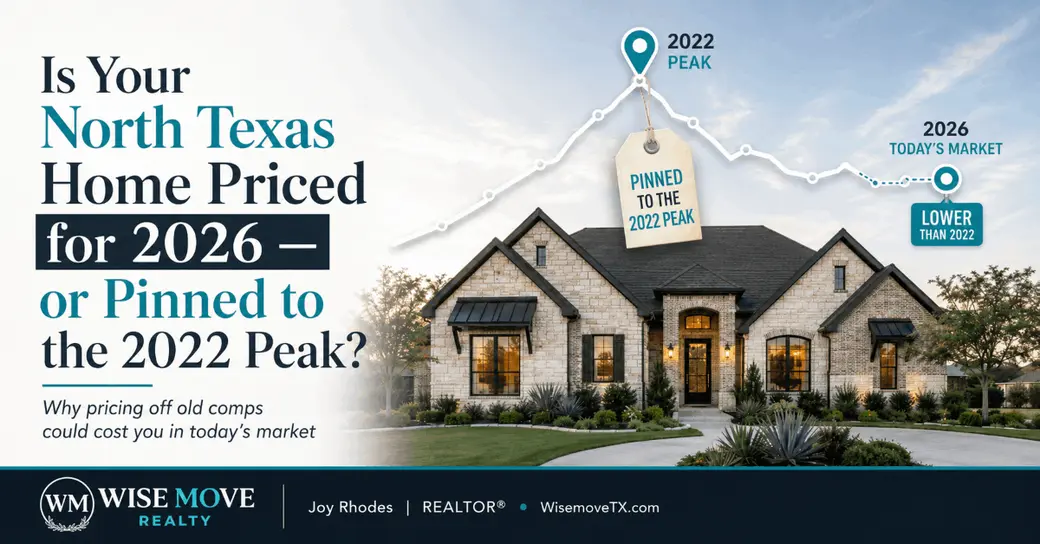
Quick Answer: North Texas home prices have softened from their 2022 peak across most DFW submarkets. Sellers pricing against 2022 comparables are pricing against market conditions that no longer exist. The homes selling well in 2026 share one pattern: they were priced where the current buyer pool starts, not where it peaked.
Unpopular opinion: the number you have in your head for what your home is worth is probably from a market that no longer exists.
That's not a criticism. It's a pattern. Homeowners anchor to the highest comparable they've ever seen — a neighbor who sold in spring 2022, a platform estimate from the rate-floor days, a number someone mentioned at a dinner party. And when the market shifts, the number in their head takes longer to update than the market does.
In North Texas right now, that gap between perceived value and market reality is where most failed listings begin.
What the 2022 Peak Actually Was — and Why It Distorts Your Reference Point
The 2022 peak in North Texas was anomalous. Mortgage rates briefly touched historic lows and then climbed sharply within 18 months. Demand was compressed into a short window. Multiple-offer situations pushed sale prices well above what fundamentals alone supported.
According to a SmartAsset study using Zillow's Home Value Index, DFW home prices have been declining since 2024, though they remain substantially above 2021 levels. Pricing your home against 2022 comparables means pricing against a market that required both historically low rates and compressed supply to sustain. Neither condition currently applies.
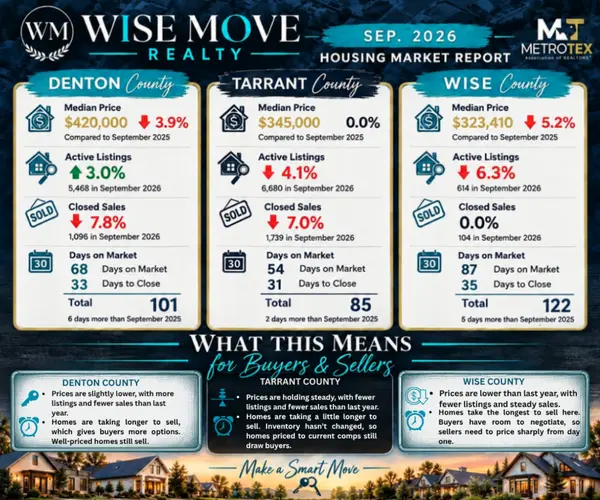
Based on data reported by TK Realty citing NTREIS as of April 2026, the DFW median home price was approximately $395,000, down roughly 1% year-over-year, with about 4.1 months of supply and an average of 61 days on market. Verify current figures through MetroTex at mymetrotex.com before finalizing any pricing decision — these figures reflect a specific point in time and conditions move.
What Overpricing Actually Costs You in This Market
The instinct is to list high and negotiate down. The math doesn't support it in a balanced market.
An overpriced listing in a market with extended days on market does something specific: it sits. And a listing that sits accumulates a stigma that price reductions don't fully erase. Buyers and their agents track days on market. A home that's been active 45, 60, or 90 days with one or two reductions signals something — even if the original problem was simply a price that was too high at the start.
Market commentary from property management research specific to North Richland Hills noted that overpricing by even 3% to 5% can add weeks to time on market and reduce net proceeds — a finding consistent with broader market behavior in balanced conditions. Every week on market carries a cost: mortgage payment, taxes, insurance, utilities, and the opportunity cost of not being in your next home.
What Most Sellers Miss: The negotiation leverage you think you're building with a high list price often works against you. A buyer who makes an offer on an overpriced home has already mentally discounted it. They open lower, ask for more concessions, and feel justified doing both because the data supports them. A well-priced home generates more competitive offers and fewer concession requests. Net proceeds are frequently higher on the accurately priced listing.
How to Audit Your Own Number
Before you defend the price you have, run this check.
Pull the sold comparables from the last 90 days, not the last 24 months. Same neighborhood, same square footage band, same bedroom and bath count where possible. Pull this from NTREIS through MetroTex — not from a platform estimate that lags current conditions and aggregates broadly.
Then ask: how long did those comparables take to sell? What was the original list price versus the closed price? Were there price reductions? If the homes that sold in the last 90 days in your price band took 45 to 60 days and closed below original list price, your market is telling you something specific about where list price needs to land to generate real buyer activity.
Local Note: Recent data from Orchard for North Richland Hills showed approximately 32% of active listings having taken a price reduction. That's not a random sample — it's a map of where sellers started too high. Pull current figures from MetroTex to verify what the number looks like at the time you're listing.
What "Pricing for 2026" Actually Means
It doesn't mean giving your home away. It means pricing where the current buyer pool — with rates in the mid-6% range and genuine alternatives to choose from — decides your home is worth pursuing over competing inventory.
That buyer is running a monthly payment calculation. They have a pre-approval and a buyer's agent who pulled the same comparables you should have. They're not going to override a price that doesn't pencil because you need a specific number for your next purchase.
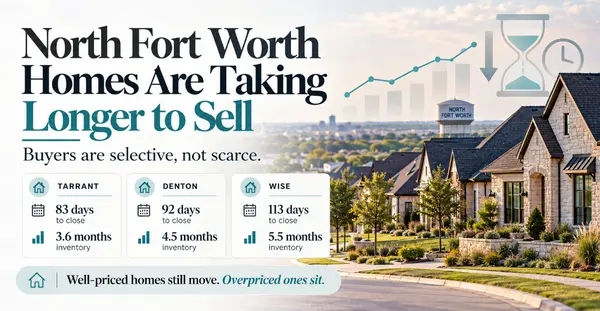
The homes selling well in Keller, Haslet, Roanoke, and North Richland Hills in 2026 share a pattern: they were priced where the current market starts, not where it peaked. They generated showings in the first two weeks. They closed at or near list. The sellers who anchored to 2022 pricing are either sitting on stale listings or they've taken reductions that already erased the premium they were trying to protect.
Pro Tip: If your list price requires a buyer to ignore current comparables and accept a narrative about what the market should be, that's not a pricing strategy. Price for where buyers are, not where you need them to be.
Common Questions
How do I know if my home is overpriced for the current North Texas market?
The clearest signals: fewer than five showings in the first two weeks, no offers after 21 days, consistent price feedback from buyer's agents, and active comparables in your neighborhood selling faster than your listing. Any one of those is a signal. All four is a diagnosis. Pull current MetroTex data to verify what the market is doing at your price point before drawing conclusions.
Should I wait for the market to recover before listing in Keller or Haslet?
Only if you can define recovery in quantifiable terms and you're confident the carrying cost of waiting is less than the price increase you're expecting. If you need to sell for life-stage reasons — downsizing, relocation, estate situation — waiting for a market shift that may or may not arrive on your timeline isn't a strategy. It's a delay with a real cost.
How much below the 2022 peak should I expect to price in North Texas in 2026?
It depends on your specific submarket and price band. The 90-day sold comparable analysis from MetroTex NTREIS data is the right tool — not a metro average and not a platform estimate that lags current conditions. Your agent should be pulling this before any pricing conversation begins.
What's the risk of listing too low vs. listing too high?
Listing too low in a market with any buyer activity tends to generate multiple offers and self-corrects upward. Listing too high generates stale inventory, price reductions, and buyer-side negotiating leverage that's harder to recover from. In the current North Texas market, the asymmetric risk is on the high side.
How does a price reduction affect buyer perception?
Buyers and their agents track price history. A reduction signals the original price was wrong — and invites questions about what else might be off. A home that starts at the right price and closes efficiently creates competitive dynamics. A home that reduces twice and sits 60 days creates leverage for the buyer. Pricing correctly at the start protects you from both outcomes.
A note on this content: This article is educational and informational only. It does not constitute legal, tax, financial, or investment advice. Market data cited reflects secondary sources available at time of writing and may not reflect current conditions. For authoritative current market data, verify through MetroTex at mymetrotex.com. Consult a licensed real estate professional before making pricing or selling decisions.
Ready to talk through your next move? Schedule a conversation at WisemoveTX.com.
Joy Rhodes | REALTOR® WisemoveTX.com joy@wisemovetx.com TX License #0622809
Categories
- All Blogs (65)
- Commercial / Investors (20)
- Equity & Investment Strategy (5)
- Family & Community (6)
- Food & Dining (3)
- Market Insights (25)
- Neighborhood Spotlights (11)
- North Fort Worth Growth & Development (6)
- North Texas Living (15)
- Outdoor Life & Recreation (4)
- Residential Buyers (27)
- Residential Sellers (24)
Recent Posts