What the One Big Beautiful Bill Act Means for Keller and Haslet Homeowners Thinking About Selling in 2026

Quick Answer: The One Big Beautiful Bill Act, signed July 4, 2025, did not change the Section 121 home sale capital gains exclusion. Married homeowners may still exclude up to $500,000 in gains from the sale of a primary residence, subject to eligibility requirements. The SALT deduction cap increased, but Texas has no state income tax, limiting the impact for most North Texas sellers. This article is educational context only — consult a licensed CPA before making any tax-related decisions about your home sale.
Here's the truth most people won't say: most of the buzz around the One Big Beautiful Bill Act doesn't apply to you if you're a homeowner in Keller or Haslet thinking about selling your primary residence. The provisions that made national headlines were aimed at investors, pass-through business owners, and high-income earners in high-tax states. For a Texas homeowner sitting on equity who wants to understand what changed before they list, the most important thing to know is what didn't change.
That said, every homeowner's tax situation is different. This article covers the general provisions as reported by NAR, the IRS, and major tax law firms. It is not a substitute for advice from a licensed CPA who knows your specific situation.
The Home Sale Exclusion: What the Law Says and What You Should Verify
The provision that matters most to equity-rich sellers is Section 121 of the tax code. It allows eligible homeowners to exclude up to $250,000 in gains from the sale of a primary residence if filing single, and up to $500,000 if married filing jointly. To qualify, you generally must have owned and lived in the home as your primary residence for at least two of the five years prior to the sale.
According to NAR's analysis of the legislation and reporting from multiple tax law firms, the One Big Beautiful Bill Act left this provision unchanged. If you've owned your Keller or Haslet home for 10, 15, or 20 years and your gain falls within the exclusion limit, your federal tax exposure on that sale may be zero — but eligibility depends on your specific ownership history, use, and filing status. Verify your eligibility with a CPA before assuming the full gain is excluded.
Reality Check: The $250,000/$500,000 thresholds haven't been adjusted since 1997. Home values in North Texas have increased substantially since then, and some long-term homeowners may now have gains that exceed the exclusion ceiling. If you've owned your home for more than 15 years and have seen significant appreciation, run the actual numbers with a CPA before you sign a contract — not after.
The SALT Cap Change: What Changed and Why It Has Limited Impact in Texas
The SALT deduction cap was raised from $10,000 under prior law. According to NAR's Washington Report and analysis from EisnerAmper, the cap increased to $40,000 for the 2025 tax year, with a 1% annual increase through 2029 before reverting to $10,000 in 2030. A phasedown applies for higher-income filers — confirm the specific threshold for your income level with your CPA.
For most homeowners in Keller and Haslet, this change has limited practical impact. Texas has no state income tax. The SALT deduction primarily benefits people paying significant state income taxes. Your property taxes are real and are part of the SALT calculation, but the deduction only applies if you itemize rather than take the standard deduction — and you should verify with your CPA which approach applies to your situation.
Local Note: Whether itemizing makes sense depends on your total deductible expenses compared to the current standard deduction. Verify the exact 2026 standard deduction figure and your personal threshold with your CPA or at IRS.gov before drawing conclusions about this provision.
The Mortgage Interest Deduction: Preserved
According to NAR's Washington Report on the legislation, the mortgage interest deduction was fully and permanently preserved at the levels set by the 2017 Tax Cuts and Jobs Act — allowing deduction of interest on up to $750,000 of mortgage debt on a primary or secondary residence.
If you're buying your next home after selling, this remains in place. For homeowners downsizing into a lower-cost property with a smaller mortgage, this deduction becomes less significant over time. Confirm how this applies to your specific post-sale purchase with your CPA.
What Actually Matters for the Timing Decision in 2026
The OBBBA provisions aren't the primary variable driving your timing decision. The variables are market-specific.
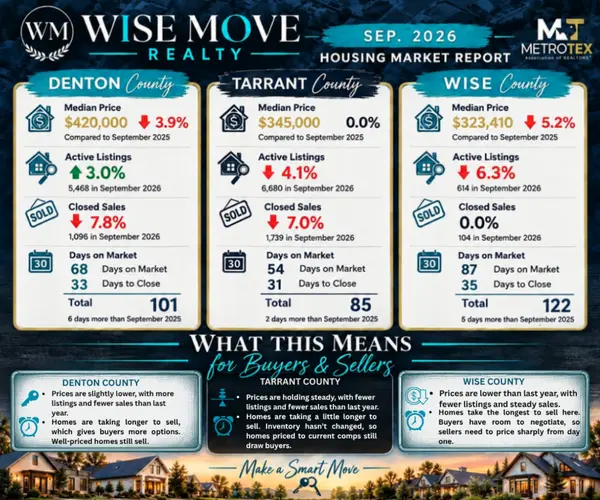
Based on data reported by TK Realty citing NTREIS, DFW median home prices stood near $395,000 as of April 2026, down approximately 1% year-over-year, with roughly 4.1 months of supply and an average of 61 days on market. Verify current figures through MetroTex at mymetrotex.com before making pricing decisions — market conditions move and these figures reflect a specific point in time.
If you've built significant equity and your gain falls inside the Section 121 exclusion, the tax picture may not be the primary obstacle. The more pressing question is whether the net proceeds after your next purchase give you the financial flexibility you're looking for. That's a conversation that requires both a real estate advisor and a CPA looking at your numbers together.
What Most Sellers Miss: Long-term homeowners sometimes underestimate their adjusted basis. Every capital improvement you've made to the home — an addition, a kitchen remodel, a new HVAC system — adds to your cost basis and reduces your taxable gain. Keep records of those improvements and share them with your CPA before the sale closes.
FAQs
Did the One Big Beautiful Bill Act change the two-year rule for the home sale exclusion?
According to available analysis from NAR and major tax law firms, the OBBBA did not modify the Section 121 ownership and use requirements. You generally still must have owned and used the home as your primary residence for at least two of the five years preceding the sale. Confirm your specific eligibility with a licensed CPA.
Does the SALT cap change affect me if I'm selling in Texas?
For most Texas sellers, the impact is limited. Texas has no state income tax, so the SALT deduction primarily reflects property taxes. Whether the SALT change benefits you depends on whether you itemize and what your total deductible expenses are. Verify with your CPA.
If my gain exceeds $500,000, what happens to the overage?
The amount above the exclusion is generally subject to capital gains tax. Long-term capital gains rates in 2026 are 0%, 15%, or 20% depending on your taxable income and filing status — your CPA can calculate the exact exposure based on your adjusted basis, projected sale price, and income picture. Do not rely on general rate tables without running your specific numbers.
What is the adjusted basis of my home and why does it matter?
Your adjusted basis is generally your original purchase price plus the cost of capital improvements made over the years. Subtracting this from your sale price gives you your gain — the number the exclusion is applied against. Major renovations, additions, and significant system replacements may all increase your basis and reduce your taxable gain. A CPA can help you calculate this accurately.
Is 2026 still a reasonable time to sell in Keller or Haslet?
Market timing depends on your specific equity position, your next move, and current local conditions — not on federal tax legislation alone. A well-priced home in Keller or Haslet with a clear plan for what comes next can make financial sense in 2026 regardless of broader market direction. That assessment requires a current market analysis and a conversation about your numbers.
A note on this content: This article is educational and informational only. It does not constitute legal, tax, or financial advice. Tax law provisions cited are based on publicly available analysis from NAR, IRS.gov, and major tax law firms as of the date of writing and may be subject to additional IRS guidance, amendment, or interpretation. Every homeowner's tax situation is different. Consult a licensed CPA or tax attorney before making any decisions about the sale of your home based on the provisions discussed here. For current market data in North Texas, verify through MetroTex at mymetrotex.com.
Ready to talk through your next move? Schedule a conversation at WisemoveTX.com.
Joy Rhodes | REALTOR® WisemoveTX.com joy@wisemovetx.com TX License #0622809
Categories
- All Blogs (65)
- Commercial / Investors (20)
- Equity & Investment Strategy (5)
- Family & Community (6)
- Food & Dining (3)
- Market Insights (25)
- Neighborhood Spotlights (11)
- North Fort Worth Growth & Development (6)
- North Texas Living (15)
- Outdoor Life & Recreation (4)
- Residential Buyers (27)
- Residential Sellers (24)
Recent Posts